
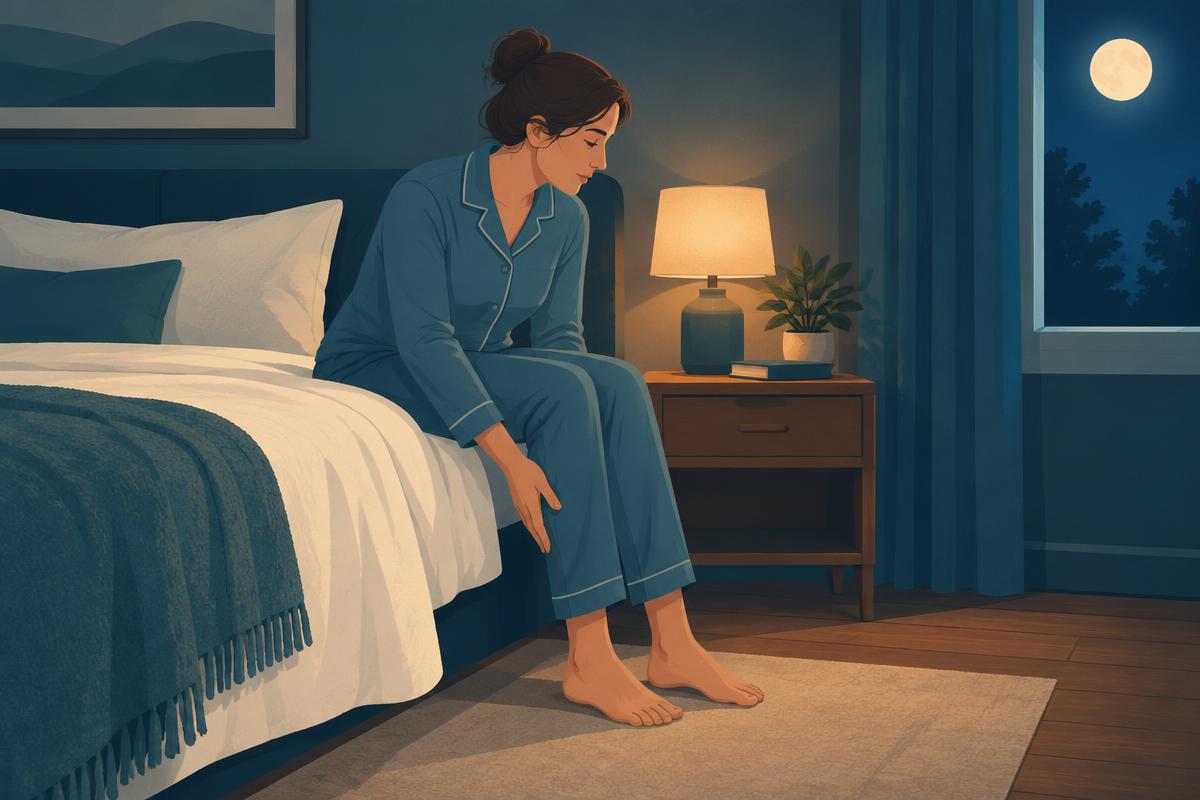
In brief: An evening urge to move the legs, who it affects, and why the test gives a signal rather than a diagnosis. In this article, you can look at the evidence behind the topic and how it relates to your own sleep. The practical steps are options to try, not promises that they will improve your sleep. A sleep questionnaire cannot identify the cause of a problem or replace an individual assessment.
Restless legs and sleep
An uncomfortable urge to move the legs when you are resting in the evening is familiar to many people. Sometimes it is hard to find words for it: crawling, tingling, pulling or simply an inability to keep still. The defining pattern described in the clinical criteria is that symptoms begin or get worse during rest, improve with movement while you keep moving, and are worse in the evening or at night [23]. An online answer cannot establish whether this is what you have. It can, however, give you a reason to describe the experience to a clinician.
What does the phenomenon feel like?
Restless legs syndrome, often shortened to RLS, is a recognised condition with diagnostic criteria [23]. The main feature is the urge to move the legs, usually with unpleasant sensations. Symptoms are more noticeable while sitting or lying still, such as on a sofa, on a long journey or in bed. Walking or stretching may bring temporary relief; the discomfort can return when you stop moving. The evening and night pattern matters: leg discomfort at another time or during activity may point to something else. Both legs can be affected, but experiences are not identical from one person to the next.
Not every movement in bed is RLS. Cramps, an uncomfortable position, pain, a medication effect and many other problems can overlap in how they feel. A healthcare professional can ask the right follow-up questions and consider other explanations. The word syndrome describes a recognised pattern, not a diagnosis that a web test can deliver. Keep that distinction in mind even if the wording of the question sounds very familiar.
How can it affect sleep?
The need to move can be particularly frustrating when you are trying to settle down to sleep. Getting up may ease the sensation for a while but interrupt your evening, while lying still may bring it back. Some people describe difficulty falling asleep, fragmented nights or tiredness during the day. Other people have occasional symptoms without a major effect on their sleep. The severity and frequency matter more than any single evening. This article does not claim that every poor night in someone with leg discomfort is caused by RLS.
If your main concern is frequent awakenings, also consider whether something else changes at the same time. The article on falling asleep discusses sleep difficulties more generally. Write down what happens in your legs as well as what happens to your sleep; this can help separate a movement-related sensation from general restlessness or worry at bedtime.
Who can experience it?
Restless legs can affect all sexes. It is reported more often among women and can be more common during pregnancy [23]. This does not mean that symptoms in men should be dismissed, or that leg discomfort in pregnancy automatically means RLS. Circumstances, symptoms and possible explanations need individual consideration. It is a known condition and there are ways to manage or treat it after proper assessment; this page does not recommend a specific treatment or medication.
There is an important correction to make transparent: our test previously asked the restless-legs question only to women. We have corrected that. Question q42 is now asked of everyone regardless of sex choice. It is not part of the sleep score, and it does not change the score of another area. The flag appears if the answer reaches the test's threshold; it is only a signal to consider the symptoms, not a clinical screening result or diagnosis. Someone below the threshold can still ask for help if symptoms worry them.
What can you do with this information?
- Notice when the sensation begins: at rest, later in the day, or during activity? The timing helps describe the problem without deciding on a label yourself.
- If you try moving around, note whether the feeling eases while you move and whether it returns when you sit or lie down again.
- Keep a brief record of how many evenings it happens and whether it delays sleep. A few clear examples may be more useful than a numerical test score.
- Mention pregnancy, medicines or other health changes when discussing symptoms with a clinician. Do not stop prescribed medicine on the strength of this article or a flag.
- If the symptoms are persistent, distressing or disrupting sleep, make an appointment with a healthcare professional and ask what might explain them.
These steps help you describe your own experience, not diagnose yourself. They are not a promise that stretching, walking or logging symptoms will resolve the underlying cause. A clinician can discuss what further assessment, if any, is appropriate for you.
When to seek advice rather than guessing
Consider a conversation with a clinician if the urge to move regularly delays sleep, if you repeatedly get up to ease it, or if symptoms change or become troublesome. Tell them whether it is better with movement and whether evenings are worse. Other leg symptoms, such as pain or swelling, also deserve their own assessment; do not assume they fit this pattern. A test result is useful only as a conversation starter. No online question checks all the diagnostic criteria or rules out other conditions.
Key takeaway
Use the suggestions above as options to consider, not as a checklist you must complete. Your answer to one question cannot explain every night or tell you which cause matters most. Notice what happens over several nights and bring specific concerns to a healthcare professional when they persist. This report describes your own answers; it does not measure your sleep or replace an individual assessment.
An evening urge to move the legs that appears at rest and eases during movement is a recognised pattern [23]. It affects people of all sexes and is more common among women and during pregnancy. Sleep Test now asks everyone about it, but gives only a signal, never a diagnosis. Persistent or bothersome symptoms are worth discussing with a healthcare professional.
Sources
- Allen RP et al. (2014). Sleep Med 15(8):860–873. PMID 25023924