
Sleep
Test.
Answer 39–42 questions in 5–10 minutes — get a free, practical sleep report.
—
Completed tests with this free tool. No login needed.
Includes tests taken before the big update on 4 October 2026.
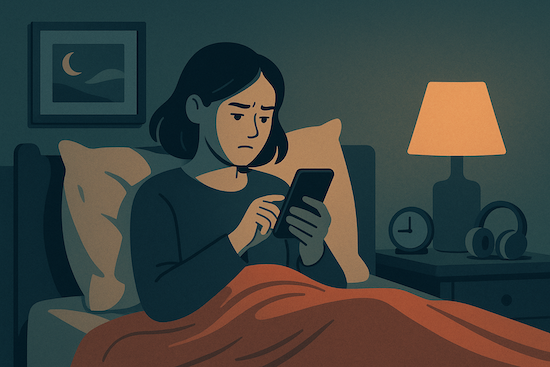
Sleep hacks from TikTok and Reddit: what does the research actually say?
Eighteen named sleep hacks checked against published research, with clear verdicts, limitations and sources.
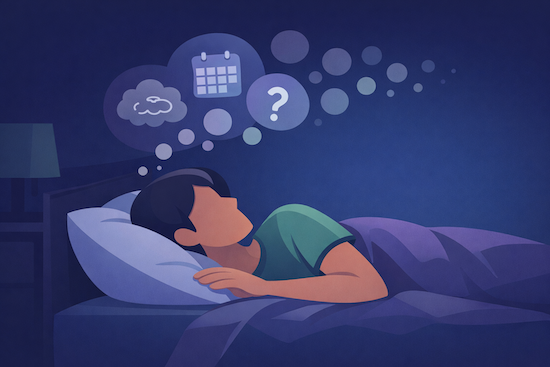
Stress, racing thoughts and sleep
How stress and a busy mind keep you awake — and ways to calm down.
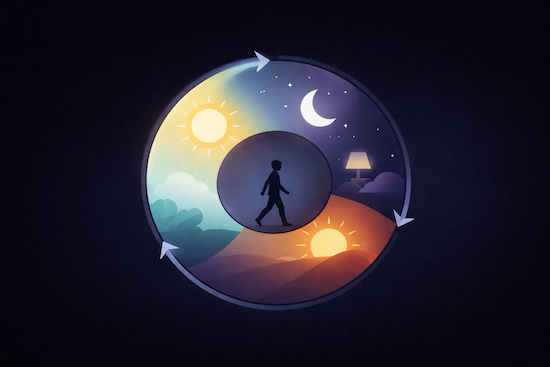
Circadian rhythm, shift work and sleep
When your body clock clashes with life — tips for evening types and shift work.
What the test covers
Sleep pattern and duration
When you sleep, how much time you allow for sleep, and how steady your schedule is.
Falling asleep and staying asleep
Time spent getting to sleep, waking during the night, and waking earlier than you intended.
Sleep quality
How rested you feel and how you judge the sleep you get, regardless of a tracker’s estimate.
Daytime sleepiness
Whether you struggle to stay alert or feel sleepy when you need to be awake.
Sleep hygiene and routines
Your habits around caffeine, screens, alcohol and winding down before bed.
Sleep environment
Light, noise, temperature and comfort in the place where you sleep.
Snoring and breathing
Snoring, observed pauses and related signs that may be worth discussing with a clinician.
Mental calm and stress
Worry or racing thoughts around bedtime, without assuming they explain every difficult night.
Lifestyle and blood pressure
Everyday habits such as movement and alcohol; no blood-pressure reading is taken.
Body clock and shift work
Your preferred sleep timing and how work hours may conflict with it.
Hormonal phases
Sleep changes around menstrual phases and menopause; these questions appear after a female choice.
How the score works
Your report gives a score from 0 to 100 for each answered area. A higher score means you reported fewer difficulties; it does not mean that your sleep was measured in a laboratory. The overall sleep score is the unweighted average of eight areas: pattern, insomnia, quality, daytime sleepiness, routines, environment, breathing and mental calm. Each contributes 12.5 percent when all eight are answered. Lifestyle questions, body-clock questions, hormonal phases and restless legs do not contribute to that total. They provide separate context and signals instead. A score is a way to organize your answers, not a medical threshold. Read how unanswered areas are handled on the method page.
Method and sources →What you get
After the last question, you see a report with the overall sleep score and separate area scores. It also highlights patterns in your answers, including selected breathing and restless-leg signals, without presenting them as diagnoses. Everyone gets the restless-legs question, which has its own article but does not become a twelfth scored area. Each area has suggestions and a link to a longer article with sources. Your report receives a random ID, not an account, so it is pseudonymous rather than anonymous. Save that ID somewhere private: anyone who knows it can open the report. If you take the test again later, you can compare two reports made since the October 2026 update. The comparison shows changes in answers, not proof that a particular action worked.
Who this is for, and who it is not for
This questionnaire is for adults who want to reflect on how they sleep and which experiences to read about further. It can help you put words to a pattern before speaking to a healthcare professional. It is not a diagnostic test and is not designed for children. Do not use it to assess urgent symptoms. If someone notices that your breathing stops at night, or you repeatedly fall asleep when driving, seek appropriate help rather than relying on a reassuring number. Persistent symptoms also deserve a conversation even if your score is high.
How this differs from a sleep tracker
A watch or ring estimates aspects of sleep from signals such as movement and heart rate. This questionnaire asks what you notice: whether you wake up, how rested you feel, and what your routines and surroundings are like over time. These tools answer different questions. Neither a device estimate nor your answers alone can explain why a night was difficult. A tracker cannot replace your experience, and this test cannot measure sleep stages or verify a breathing disorder.
Questions and answers
- Is the test free?
- Yes. You can take the sleep test and view your report for free without signing in.
- Do you store personal information about me?
- We do not ask for your name or email. We save your answers and report under a random report ID, so they are pseudonymous, not anonymous. Keep that ID private: anyone with it can open your report. See our privacy page for details.
- Is this a diagnosis?
- No. The sleep test describes your answers. It cannot diagnose a sleep condition or replace a healthcare professional.
- How long does the test take?
- Most people can answer the 39–42 questions in about 5–10 minutes.
- What does the sleep score mean?
- It summarizes eight answered areas on a scale from 0 to 100. A higher score means fewer difficulties in your answers, not a medical measurement.
- How do you choose sources?
- We link to peer-reviewed research in the articles and list the numbered references on the method page. Research has limitations, and the test is not clinically validated.
- What is a normal sleep duration for adults?
- Many adults need around seven to nine hours, but needs differ. Allow enough time for sleep and consider how you feel and function during the day.
- Why do I wake rested but still feel tired?
- Feeling rested on waking and having low energy later are not the same thing. Workload, health and other factors may matter. If tiredness persists, discuss it with a healthcare professional.
- Can I take the test again?
- Yes. Save each report ID if you want to compare answers later. Reports made before 4 October 2026 cannot be compared with newer reports because the test changed.