
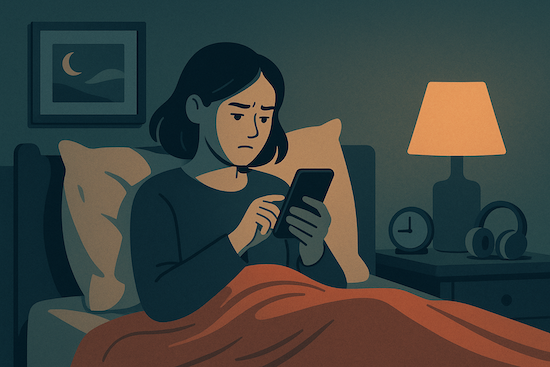
In brief: Eighteen named sleep hacks checked against published research, with clear verdicts, limitations and sources. In this article, you can look at the evidence behind the topic and how it relates to your own sleep. The practical steps are options to try, not promises that they will improve your sleep. A sleep questionnaire cannot identify the cause of a problem or replace an individual assessment.
A catchy name and a convincing video do not tell us whether a sleep trick works. This guide takes 18 familiar claims one by one: what is promised, what has actually been studied, and who might reasonably consider the idea. Studies of a particular population cannot automatically be generalized to everyone. A pleasant ritual is not the same as proof of better sleep. If you have persistent insomnia, dangerous daytime sleepiness, or witnessed pauses in breathing, do not rely on a viral trick instead of seeking an assessment.
How to read the verdicts: Well supported · Some support · Uncertain · Unlikely · Probably harmless but undocumented · Not advised, possible risk. These labels summarize evidence for the specific claim, not whether everyone should do the same thing. Some sections distinguish a plausible component from an untested branded method.
You do not have to try every idea in this guide. Start by asking what problem a claim promises to solve and whether the study actually tested that claim. A method can feel relaxing without changing a measured sleep outcome. If an idea could block breathing or delay an assessment, that matters more than its popularity. Your own answers to the sleep test can help you find the relevant area, but they cannot tell you which viral idea will work for you.
Contents
- Mouth taping
- Sleepmaxxing and orthosomnia
- Melatonin gummies
- Magnesium and the sleepy girl mocktail
- Kiwi before bed
- Blue light glasses
- White noise and brown noise
- ASMR and sleep stories
- Weighted blanket
- The military sleep method
- Cognitive shuffle
- 4-7-8 breathing
- Bed rotting
- The 10-3-2-1-0 rule
- Bilateral eye movement
- An ice-cold bedroom
- Sleep divorce
- CBT-I: what has stronger evidence
Mouth taping at night
The claim: Taping your lips shut forces nasal breathing and allegedly stops snoring, improves oxygen levels and makes sleep deeper. Videos often make it look like an easy substitute for finding out why someone breathes through their mouth.
What research shows: A systematic review covering ten studies and 213 patients found thin evidence for benefit [28]. More importantly, obstructed nasal breathing can make taping dangerous: someone with a blocked nose needs a way to breathe through the mouth. Snoring or observed breathing pauses deserve evaluation, not an experiment that blocks an airway. The reviewed studies do not establish safety for everyone.
Verdict: Not advised, possible risk.
Who and test area: If you have snoring, a blocked nose or witnessed pauses, discuss them with a clinician rather than taping your mouth; see Snoring and breathing signals.
Sleepmaxxing and the perfect tracker score
The claim: Optimize every setting, track every sleep stage and pursue a perfect score on a watch or ring. The underlying promise is that more measurement must produce better sleep.
What research shows: The term orthosomnia describes cases in which striving for ideal tracker data becomes a source of worry and sleep difficulty [29]. That paper introduces a clinical observation, not a study proving that trackers generally worsen sleep. Consumer estimates of sleep stages are not a diagnosis, and a single number should not outrank how you function during the day. Tracking may help some people notice a pattern; it may also give others more to worry about.
Verdict: Uncertain; for some people the pursuit itself may backfire.
Who and test area: If scores make you anxious, consider taking a break from checking them; see Sleep quality.
Melatonin gummies
The claim: A sweet supplement before bed supposedly switches sleep on, night after night, whatever the reason you cannot sleep. A gummy format can make a hormone seem like an ordinary sweet.
What research shows: A meta-analysis found small average improvements in sleep measures across studied settings [31]. But that does not establish a useful effect for each person with long-standing insomnia. An American sleep medicine guideline gives a weak recommendation against using melatonin for chronic insomnia in adults [30]. Timing, dose, age and reason for using it matter; results for one sleep problem do not transfer unchanged to another. Over-the-counter availability and regulation differ between countries, so advice from a US video may not fit where you live.
Verdict: Uncertain for long-term insomnia.
Who and test area: If falling asleep remains difficult, bring the pattern and any supplements you use to a professional; see Falling asleep at night.
Magnesium and the sleepy girl mocktail
The claim: A drink of magnesium and tart cherry juice is said to make you sleepy without changing anything else about your evenings. Some posts imply that the combination has been directly established.
What research shows: A review of magnesium for insomnia pooled three small studies involving 151 older adults and rated the evidence low quality [32]. That cannot establish an effect in younger people or show that a viral drink works. The often-cited tart cherry juice report was a small pilot study [33]; it is not a trial of the combined mocktail. Ingredients, amounts and other health considerations vary. Enjoying a drink and proving it improves sleep are different questions.
Verdict: Uncertain.
Who and test area: If you like an evening drink, choose one that suits you rather than expecting a guaranteed effect; see Sleep hygiene and routines.
Kiwi before bed
The claim: Eating two kiwis before bedtime supposedly makes you fall asleep faster and stay asleep. The precise fruit and timing are often presented as if the formula had been settled.
What research shows: The frequently shared finding comes from one small study without a control group [34]. Changes over time could reflect other factors; without a comparison group the study cannot isolate the kiwi's contribution. There is no reason to turn a food you enjoy into an obligation or to treat it as the answer to persistent insomnia. Ordinary food preferences and allergies also matter when copying any food trend.
Verdict: Unlikely to make a meaningful difference on its own; probably harmless for someone who can eat kiwi.
Who and test area: If you enjoy kiwi, it can remain a snack, not a sleep target; see Sleep hygiene and routines.
Blue light glasses
The claim: Wear tinted glasses while using your phone and the adverse effects of evening screens are supposedly canceled out, whatever else you watch or do.
What research shows: A Cochrane review found sleep-related results for blue-light-filtering lenses uncertain and the available studies inconsistent [35]. Separately, an experiment comparing a light-emitting e-reader with printed reading found measurable effects on circadian timing and alertness under its study conditions [12]. Both statements can be true: evening light can matter, yet these glasses have not been shown to solve the whole problem. Content, brightness and timing also differ between screen use and a controlled experiment.
Verdict: Uncertain for the glasses; this is not evidence that evening light is irrelevant.
Who and test area: If screens keep you engaged late, try adjusting brightness or content too; see Sleep hygiene and routines.
White noise and brown noise from an app or machine
The claim: A steady hiss or deeper rumble supposedly masks every disturbance and reliably produces better sleep. Brown noise is often advertised as a special improvement over white noise.
What research shows: A systematic review judged the evidence for continuous noise as a sleep aid to be of very low quality [17]. This does not prove that nobody finds it comforting, but it does not show a reliable sleep benefit either. Continuous sound may itself be disturbing; consider volume and prolonged listening, including hearing comfort. The review does not justify a confident claim that one color of noise is superior. Addressing an identifiable external noise source may be a different question.
Verdict: Uncertain.
Who and test area: If you want to try background sound, keep it comfortable and notice whether it helps you; see Sleep environment.
ASMR and sleep stories
The claim: Whispering videos, soft tapping or narrated stories supposedly send anyone straight to sleep. ASMR describes a particular pleasant tingling response, which not everyone experiences.
What research shows: Two studies reported lower heart rate and more pleasant affect among people who experience ASMR [36]. These outcomes concern immediate feelings and physiology, not demonstrated improvement of insomnia. A sleep story may be an agreeable alternative to stimulating content, but it is not the same intervention as the ASMR studied. Responses depend on the person, audio and situation; a video that relaxes one listener may irritate another.
Verdict: Some support for relaxation, not tested as a solution for sleep problems.
Who and test area: If quiet listening feels pleasant, use it as a wind-down option; see Stress, racing thoughts and sleep.
Weighted blanket
The claim: Heavier bedding is said to reduce anxiety and insomnia for everyone, as if more weight always meant a more restful night. Product promotions often omit who was actually studied.
What research shows: A randomized study of 120 patients reported a clear difference on its insomnia outcomes [37]. Its participants had both insomnia and psychiatric diagnoses, so the result cannot automatically be applied to people without those characteristics. Comfort and ability to move or remove the blanket matter; a blanket that feels hot or restrictive is not a universal answer. The trial supports a narrower conclusion than a general social-media promise.
Verdict: Some support in the studied population.
Who and test area: If heavier bedding feels comfortable and safe to use, assess your own preferences; see Sleep environment.
The military sleep method
The claim: Relax your face and body, picture a calm scene and fall asleep on command in minutes, sometimes with a claimed near-perfect success rate. The dramatic number is part of the appeal.
What research shows: There are no controlled studies of this exact named method demonstrating that success rate. Its elements resemble muscle relaxation and imagery; the clinical guideline includes relaxation training as an individual component for chronic insomnia [6]. Evidence for a component does not verify a particular script, countdown or viral promise. If trying to relax becomes another performance test, it is reasonable to stop forcing it.
Verdict: Probably harmless but undocumented as a specific method.
Who and test area: If quiet imagery suits you, use it without a deadline; see Falling asleep at night.
Cognitive shuffle: random words and images
The claim: Think of disconnected objects or words in rapid succession, so your brain supposedly cannot keep worrying and you drift off. Online instructions differ on pace and sequence.
What research shows: Controlled sleep studies of the named cognitive shuffle method are lacking. A cognitive model of insomnia describes how worry and monitoring wakefulness can maintain difficulties [20]. That model makes redirecting attention plausible; it does not demonstrate that this particular word exercise shortens the time to sleep. The guideline for chronic insomnia addresses other evaluated components [6], not a verified recipe for random images.
Verdict: Probably harmless but undocumented.
Who and test area: If word play helps you leave worries alone, it is an option rather than a rule; see Stress, racing thoughts and sleep.
4-7-8 breathing
The claim: Inhale for four counts, hold for seven and exhale for eight; the exact numbers are claimed to trigger sleep quickly. A precise sequence can sound more established than it is.
What research shows: This exact count pattern is not well studied for sleep. Relaxation training in general is included among individual components recommended in a chronic insomnia guideline [6], but that does not verify these numbers or a guaranteed onset time. Holding the breath may feel uncomfortable for some people. If it does, choose an easier, unforced breathing pace or another calm activity instead of insisting on the count.
Verdict: Probably harmless but undocumented as an exact counting pattern.
Who and test area: For someone who likes gentle breathing, comfort matters more than the numbers; see Stress, racing thoughts and sleep.
Bed rotting: staying in bed and scrolling
The claim: Spend a whole day in bed with your phone to “reset” and catch up on rest. Rest itself is understandable, but calling all time in bed restorative can be misleading.
What research shows: The scrolling version conflicts with stimulus control, a recommended component for chronic insomnia that aims to reconnect bed with sleep rather than extended wakefulness [6]. That does not mean nobody may rest in bed when ill, exhausted or simply needing a break. It means that prolonged awake scrolling is not an evidence-based way to address trouble falling asleep. If you notice the bed becoming a place of anxious wakefulness, reconsider the habit.
Verdict: Unlikely to improve sleep; it might make sleep harder for some.
Who and test area: If lying awake and scrolling is your pattern, see Falling asleep at night.
The 10-3-2-1-0 rule
The claim: Ten hours without caffeine, three without alcohol, two without work, one without screens and zero snoozes is advertised as a single formula for perfect sleep.
What research shows: Split the rule into parts. In an experiment, caffeine affected sleep even when taken six hours before bedtime [10]; that does not establish a universal ten-hour cutoff. Alcohol can change sleep across the night [11], so avoiding it close to bedtime is a reasonable option, but research does not validate precisely three hours for everyone. The two-, one- and zero-hour instructions have not been tested together as this rule. Shift schedules, individual sensitivity and context matter more than a memorable string of digits.
Verdict: Some support for parts of the rule; the exact numbers are not established.
Who and test area: If caffeine or evening work bothers you, experiment with timing relative to your sleep; see Sleep hygiene and routines.
Bilateral eye movement for racing thoughts
The claim: Moving your eyes from side to side is said to stop rumination and send you to sleep. Promotional claims sometimes point to sleep-ring company data rather than independent sleep research.
What research shows: We found no controlled sleep study of this viral technique to cite. Manufacturer-collected data are not an independent controlled test of whether the eye movements improve sleep. A technique that sounds neuroscience-based still needs a comparison group and a relevant outcome before an effect can be asserted. Do not confuse this claim with findings about other, differently studied interventions. Lack of evidence is not proof of impossibility, but there is no basis for a confident promise here.
Verdict: Unlikely on current evidence; undocumented for sleep.
Who and test area: If racing thoughts are the problem, read about approaches with clearer rationale in Stress, racing thoughts and sleep.
An ice-cold bedroom
The claim: The colder the room, the better you will sleep; an exact low temperature is often presented as universal. That ignores bedding and individual comfort.
What research shows: A review discusses the relationship between thermal conditions and sleep [15], but it does not establish “ice cold” as an optimum for every person. Humidity, duvet, clothing and season change how a room feels. If you wake overheated, lighter bedding or ventilation may be worth trying; if you are already cold, lowering the thermostat further is not an obvious improvement. The point is to notice discomfort, not to chase an extreme number.
Verdict: Some support for temperature mattering; “ice cold” is an exaggeration.
Who and test area: If temperature wakes you, adjust bedding and room conditions gently; see Sleep environment.
Sleep divorce: sleeping in separate rooms
The claim: Sleeping apart from a partner allegedly fixes sleep and therefore improves the relationship. A catchy term turns a household arrangement into a universal prescription.
What research shows: This particular choice has barely been investigated with research that could establish an effect on sleep. Some couples report that sleeping separately helps them, especially when noise, schedules or movement disturb each other; those reports cannot tell us how frequently it helps or whom it suits. For others, closeness or practical space needs matter more. It is a conversation about preferences and circumstances, not a scorecard for how close a couple is.
Verdict: Uncertain — not adequately studied.
Who and test area: If sharing a room is disruptive, discuss workable arrangements together; see Sleep environment.
CBT-I: what has stronger evidence and rarely goes viral
The claim: A structured approach to persistent insomnia is less appealing than a one-minute trick, but may be worth considering when repeated sleep problems affect everyday life. CBT-I stands for cognitive behavioral therapy for insomnia; it is not a single relaxation exercise or a list of “perfect” habits.
What research shows: An American sleep medicine clinical guideline recommends multicomponent CBT-I as the first-choice treatment for chronic insomnia in adults [6]. It combines approaches adapted to the person, including work on thoughts and behaviours around sleep. A guideline recommendation is not a promise of success for every individual; other causes of disturbed sleep still deserve attention. What distinguishes CBT-I from the hacks above is the stronger body of evaluated evidence for the complete structured treatment, not a claim that everybody should self-administer the same steps.
Verdict: Well supported for chronic insomnia in adults.
Who and test area: If sleep difficulties persist and affect your days, ask a qualified professional about CBT-I; see Falling asleep at night.
How these ideas relate to your test
The sleep test groups questions by area rather than diagnosing the cause of a bad night. Mouth taping points to breathing; light, caffeine and food to hygiene; sound, blankets, temperature and separate rooms to environment. Tracking concerns and waking unrefreshed belong with quality; relaxation, worry and scrolling overlap mental calm and insomnia. Your answers can identify what to read next, not establish that a particular trick will work for you. Persistent symptoms or breathing concerns warrant a professional conversation.
Sources
- Edinger JD et al. (2021). J Clin Sleep Med 17(2):255–262. PMID 33164742
- Drake C et al. (2013). J Clin Sleep Med 9(11):1195–1200. PMID 24235903
- Ebrahim IO et al. (2013). Alcohol Clin Exp Res 37(4):539–549. PMID 23347102
- Chang AM et al. (2015). PNAS 112(4):1232–1237. PMID 25535358
- Okamoto-Mizuno K, Mizuno K (2012). J Physiol Anthropol 31:14. PMID 22738673
- Riedy SM et al. (2021). Sleep Med Rev 55:101385. PMID 33007706
- Harvey AG (2002). Behav Res Ther 40(8):869–893. PMID 12186352
- Rhee J et al. (2025). PLoS One 20(5):e0323643. PMID 40397877
- Baron KG et al. (2017). J Clin Sleep Med 13(2):351–354. PMID 27855740
- Sateia MJ et al. (2017). J Clin Sleep Med 13(2):307–349. PMID 27998379
- Ferracioli-Oda E et al. (2013). PLoS One 8(5):e63773. PMID 23691095
- Mah J, Pitre T (2021). BMC Complement Med Ther 21(1):125. PMID 33865376
- Losso JN et al. (2018). Am J Ther 25(2):e194–e201. PMID 28901958
- Lin HH et al. (2011). Asia Pac J Clin Nutr 20(2):169–174. PMID 21669584
- Singh S et al. (2023). Cochrane Database Syst Rev 8:CD013244. PMID 37593770
- Poerio GL et al. (2018). PLoS One 13(6):e0196645. PMID 29924796
- Ekholm B et al. (2020). J Clin Sleep Med 16(9):1567–1577. PMID 32536366